
FEST FILM LAB WORKSHOP
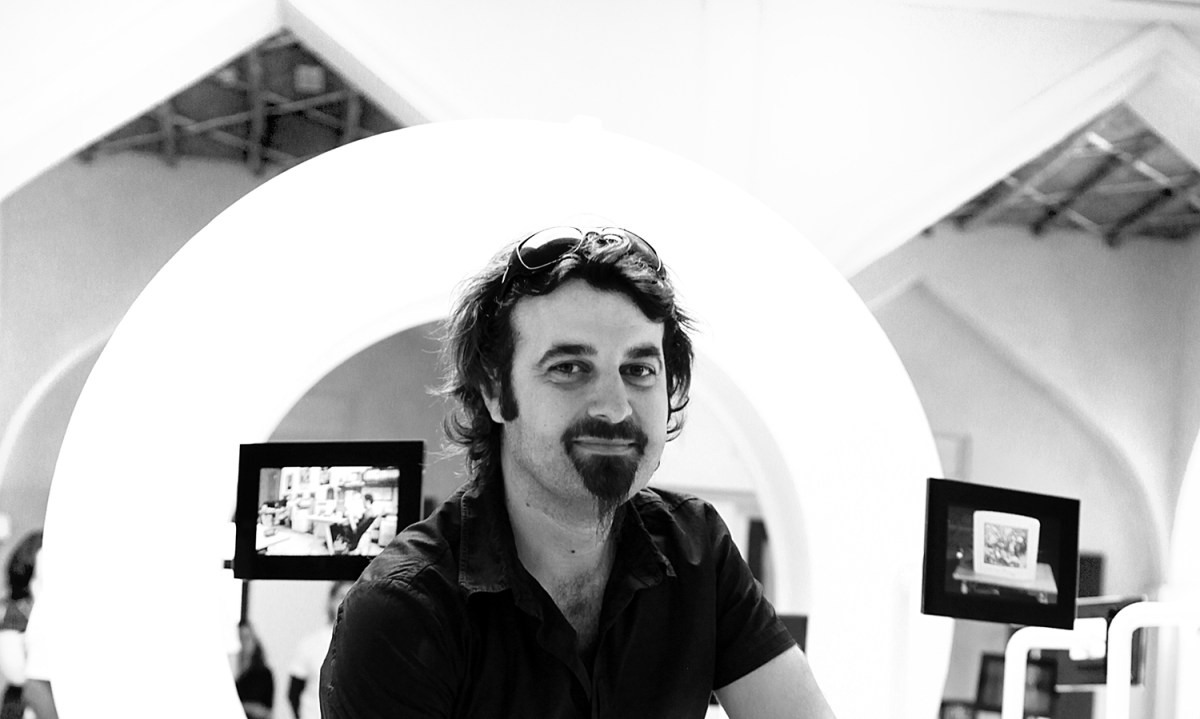
Techniques for Directing Non-Actors with Scandar Copti
WORKSHOP DESCRIPTION
Techniques for directing non-actors: Singular Drama
Throughout the two-day practical workshop, participants will learn and experience the technique that Scandar uses during the preparations of his actors and non actors as well as during the shooting.
Participants will get hands-on insight into the process of creating drama in a film using the human capacity to respond emotionally to fictional situations. The Singular Drama method is applicable on professional actors as well as non-actors.
Filmmakers often use the element of surprise to direct actors for certain scenes to get authentic emotional responses.
The directors of AJAMI based their film entirely on this principle.
Unlike other forays into improvisation, AJAMI had a very precise screenplay and a well-constructed plot that demanded specific emotional responses from its actors.
The actors ended up acting out a story, without being aware that they were being directed according to a pre-written script. The film is a work of fiction which shows “real” people acting in situations that are orchestrated by the directors, but very “real” to the performers, resulting in the actors projecting emotions on camera that they actually experienced at the time.
This was achieved over specialized workshops, in which the actors were brought to each character’s emotional and psychological state as written in the script.
Workshop learning objectives:
1. Participants will learn techniques to liberate their non-actors from the fear of the camera.
2. Participants will learn how to prepare their actors/non-actors for filming.
3. Participants will learn and experiment with improvisation techniques.
4. Participants will experience the method as actors in order to get a better understanding of the involved processes.
5. Participants will get insights on pre-production, production and shooting techniques when applying the method.
6. Participants will learn how to direct actors and non-actors using the Singular Drama method. Participants are encouraged to bring scenes they would like to direct.
ABOUT SCANDAR COPTI
Scandar Copti is a Palestinian Oscar-nominated director, screenwriter and visual artist, known for his distinctive approach to working with non-professional actors.
His debut feature film, Ajami (2009), won the Camera d’Or Special Mention at the Cannes Film Festival and was nominated for Best Foreign Language Film at the 82nd Academy Awards. The film received more than 15 international awards.
His second feature film, Happy Holidays (2024), had its world premiere in the Orizzonti Competition at the 81st Venice International Film Festival, where Copti won the Orizzonti Award for Best Screenplay. It went on to receive major international recognition, winning the Golden Alexander – Theo Angelopoulos Award for Best Film at the Thessaloniki International Film Festival and the Étoile d’Or for Best Film at the Marrakech International Film Festival, where Manar Shehab and Wafaa Aoun also jointly received the Best Actress Award. In 2025, Happy Holidays received the Aurora Award for Best Film at the Tromsø International Film Festival and a Special Mention for the Bridging the Borders Award at the Palm Springs International Film Festival.
Beyond his feature films, Copti has written, directed and edited fiction, documentary and experimental works. His video art projects have been exhibited internationally at venues including the Herzliya Museum, the Nachum Gutman Museum, NYU Abu Dhabi Gallery, b_tour Foothold Festival, Beit Ha’Gefen and Oslo Kunstforening, among others.
Copti has served on the juries of numerous international film festivals and film organisations, including the Tribeca Film Festival, Thessaloniki International Film Festival, FEST and the Arab Fund for Arts and Culture (AFAC). In 2011, he served as President of the Human Rights Award jury at the Istanbul International Film Festival.
He was also part of the team that launched the Doha Film Institute (DFI), where he headed the Education Department until 2011, contributing to the development of filmmaking education and emerging talent in the region.
Alongside his filmmaking practice, Copti has developed a distinctive methodology for working with non-professional actors, an approach central to both Ajami and Happy Holidays. His work explores the relationship between performance, character, social structures and lived experience, and this methodology has become an important part of his teaching and filmmaking practice.
PROFILE OF PARTICIPANT
The workshop is designed to Directors, 1st AD, Producers, and filmmakers interested in developing the skill of directing non actors.
LOCATION OF THE WORKSHOP
London, UK — University of Greenwich
16 hours
Dates: 16th-17th of January 2027
Location: London, UK — University of Greenwich
Price: GBP 599.99. Special registration rate: GBP 399.99 until 8 December 2026.
Vacancies: 25
By registering to the workshop you agree with FFL Terms and Conditions
Please add our address to your email safe senders list, address book or contact list to avoid FEST e-mails in spam.
FUNDING AND FINANCIAL SUPPORT
You may be able to claim a full or partial refund of your workshop fee through an external funding programme.
UNITED KINGDOM
ScreenSkills — UK-Wide Training Bursaries
Applicants aged 18 or over who have the right to work in the UK, hold a UK bank account and work or intend to work in the UK screen industries can apply for practical training. Maximum awards are £750 at entry level, £1,500 in early career and £2,000 for experienced or expert professionals. Workshop fees, travel and accommodation may qualify. Actors, voice-over artists, presenters, performers and current students are excluded. Apply between two weeks and three months before the workshop. ScreenSkills bursary guidelines
Northern Ireland Screen — Skills Fund
Northern Ireland residents currently working in the local independent screen sector, with at least one year of experience, may apply for up to 75% of the course fee, capped at £2,000. Send your CV, course details and costs to Northern Ireland Screen at least three weeks before the workshop. Confirm current funding availability and the proposed location with the agency. Skills Fund details in the Mid Ulster Council funding directory, section 13.4
Screen Scotland — Screen Professional Development Fund
Scotland-based film and television freelancers with at least two to three professional credits can apply for £250 to £5,000 towards training in the UK or abroad. Eligible costs include the workshop fee, economy travel, accommodation and subsistence of up to £30 per day. Applicants must contribute at least 10%, in cash or in kind. Apply at least two weeks before the workshop. Screen Scotland funding guidelines and application
OTHER COUNTRIES
Explore the opportunities available in other countries and check the eligibility requirements.
Funding and Financial Support
Important information
The funding opportunities listed below are provided as a general reference to help participants identify possible sources of financial support for attending FEST FILM LAB training programmes, refunding their fees and sometimes expenses. The list is not exhaustive and, despite our efforts to keep it accurate, may contain errors or information that has changed.
Participants should consult the relevant organisation’s website and contact the funder directly to confirm that the scheme is still active and applies to their individual circumstances and chosen training programme.
FEST FILM LAB is not affiliated with, endorsed by, or responsible for the organisations or funding schemes listed. We provide these references solely to help participants explore potential funding options.
Depending on where you live or work, you may be able to apply for funding towards your FEST FILM LAB workshop fee. Some schemes also cover travel and accommodation. Find your country below and check the rules for your profession, your chosen workshop and its location.
Each funding body sets its own eligibility criteria, deadlines and application requirements. Contact the relevant organisation for details.
Last reviewed on 10 November 2026.
Austria
Austrian Film Institute — Professional Development Grants
Film professionals whose main residence is in Austria can apply for support generally covering 50% of eligible costs, including workshop fees, economy travel and accommodation. Eligible accommodation costs are capped at €120 per night during the course. Applicants need relevant professional training or experience. Applications are accepted throughout the year and must be submitted before the workshop begins. Training focused on television, series or short films is excluded, with an exception for animation.
Austrian Film Institute guidelines
VdFS — Professional Development Support
Eligible members of the collecting society VdFS can apply for support towards professional workshops, courses and masterclasses, with total grants of up to €3,000 per calendar year. Participants contribute at least 30% of the costs. Support can cover registration fees, with an additional limit of €500 per application for travel and accommodation combined. Eligibility normally requires at least two years of membership and a minimum number of qualifying registered works or performances, depending on membership duration and professional category. Applications must be submitted before the workshop begins and are considered at scheduled funding rounds.
VdFS funding guidelines and application dates
AMS — Employer Support for Staff Training
Employers may apply for support covering 50% of eligible course fees through the Qualifizierungsförderung für Beschäftigte. The scheme supports specific employee groups, including workers aged 50 and over, employees with compulsory schooling only, and women with certain school or vocational qualifications. Training must meet the programme’s employment objectives and include at least 16 hours of in-person or live online learning. Courses abroad may qualify where AMS can carry out on-site checks. The employer submits the application, normally at least one week before the course begins.
Carinthia — Further Training Scholarship for Independent Cultural Workers
People actively involved in independent cultural initiatives in Carinthia may apply for a competitive €3,000 scholarship for further training. Eligible applicants can work in artistic or organisational roles, including production and cultural management; voluntary involvement also counts. The scholarship can contribute towards course or workshop fees where the training relates to the initiative’s artistic discipline or cultural work. A recommendation from the cultural initiative is required. The scholarship is offered through periodic calls; travel and accommodation are not covered for course attendance.
Scholarship details and eligibility
Belgium
Flanders Audiovisual Fund — Study Grants
Eligible Flemish filmmakers and professionals living and working in Flanders can apply for up to 50% of eligible workshop fees, travel and accommodation, normally capped at €2,000 per year. Directors, screenwriters and producers are among the eligible roles. The fund excludes students, actors and technical crew such as camera and sound professionals. Short international courses introducing innovative practices may qualify for up to 75%. Apply through MyVAF by the first published deadline after the workshop starts. Flanders Audiovisual Fund study grants
Wallonia–Brussels Federation — Centre du Cinéma et de l’Audiovisuel Training Support
Audiovisual professionals can apply for up to 50% of the registration fee for eligible professional training in Belgium or abroad. The scheme uses a list of recognised courses. Ask the Centre du Cinéma to confirm that your specific FEST FILM LAB workshop is covered. Submit the application before the course begins. Centre du Cinéma training support
Wallonia — Chèques-Formation
Eligible self-employed professionals and SMEs with their main place of business in French-speaking Wallonia can use training vouchers with approved providers. Each voucher has a face value of €30 for one hour of training per participant. Ask Le Forem to confirm that the provider and workshop are approved. FEST FILM LAB’s approval under this scheme has not been confirmed. Walloon Government training voucher guidelines
Brazil
Banrisul Cultural — Mobilidade e Conexões
Artists and cultural professionals living in Rio Grande do Sul, including audiovisual professionals, can apply for R$2,500–R$20,000 towards participation in courses and workshops abroad. Support can cover travel, accommodation, meals and other eligible mobility expenses. Applications are accepted on a rolling basis while funding remains available and must be submitted at least 60 days before the activity begins.
Programme details and application guidelines
Paraná — Mobilidade Cultural
Cultural professionals based in Paraná may apply for mobility grants supporting in-person workshops and short courses, including activities abroad, delivered by reputable organisations with recognised professional relevance. Funding supports eligible travel and participation expenses, with awards determined by the applicable call. The latest published application round closed on 3 November 2026; future opportunities will be announced by the state Secretariat of Culture.
Bulgaria
National Culture Fund — Mobility
Eligible artists and cultural professionals with citizenship or residence rights, including those working in film, may apply for support to attend international professional development activities. Under the 2026 rules, projects involving one participant could receive up to €1,500, with eligible expenses including in-person workshop fees, travel, accommodation and subsistence. Applications are assessed through scheduled calls. The 2026 application rounds have closed; future deadlines and funding conditions will be published by the Fund.
Croatia
HAVC — International Cooperation
Resident film and audiovisual professionals may apply to the Croatian Audiovisual Centre (HAVC) for support towards professional training abroad through its International Cooperation programme. Independent workshops may be considered, including programmes outside HAVC’s published lists, provided they meet the call’s criteria. Applications are assessed on professional quality, relevance and contribution to the national audiovisual sector. Funding is awarded individually, according to the proposed activity and budget.
Programme details and application guidelines
Cyprus
HRDA — Overseas Training Support
Eligible employers and self-employed professionals may receive financial support through the Human Resource Development Authority’s Single-Company Training Programmes Abroad scheme. Eligible costs include workshop fees, travel and accommodation, subject to funding limits. Training must address a relevant professional need that cannot be met locally, fall within HRDA’s approved subject areas and provide at least 10 hours of training. Applications are submitted through the Ermis portal at least three calendar weeks before the workshop begins, with approval required before participation.
Czechia
Audiovisual Producers’ Association — Scholarships for Producers
Producers can apply for up to 50% of the workshop fee, capped at €1,000, for training that develops their production skills. Non-members and film school students may also apply. Travel and accommodation are excluded. You need confirmation of your place and must meet both the association’s submission deadline and its requirement to apply within 14 days of the end of the course. The final published 2026 deadline has passed. APA scholarship rules and application form
Denmark
Danish Film Institute — Filmfremme Udland
Film professionals can apply for help with the workshop fee, return travel and accommodation for training abroad. The institute publishes a list of priority courses and can consider other workshops individually. If the training forms part of a permanent employment relationship, the employer must cover at least 50% of the actual costs. Apply as soon as your place is confirmed and allow up to four weeks for assessment. Danish Film Institute application guidelines
Estonia
Cultural Endowment of Estonia — Audiovisual Arts Endowment
The endowment supports continuing professional education in the audiovisual arts and can contribute to the cost of attending events abroad. Ask the endowment which application category applies and whether you can include the registration fee, travel and accommodation in your budget. Audiovisual Arts Endowment funding criteria
Finland
AVEK — Personal Training Grants
Audiovisual professionals with a Finnish personal identity code can apply for up to 80% of eligible workshop fees and travel costs. The scheme covers artistic, journalistic, technical-artistic and production roles. Accommodation, subsistence and lost earnings are excluded. An individual can normally receive a grant once every two years. Apply before the course starts and at least two weeks before the relevant AVEK committee meeting. AVEK training grant guidelines
France
Employer-Funded Professional Development
If you work for a French company, your employer may cover or reimburse all or part of your workshop fee through its professional development budget or plan de développement des compétences. This option applies across sectors, provided the training is relevant to your work. Support depends on your employer’s agreement and internal policy. Contact your HR department or manager with the workshop programme, dates and fee. French government information on employer-funded training
Corsica — Young Talent Scholarships
Students from Corsica aged under 30 may be eligible for the Collectivité de Corse’s Bourses aux jeunes talents, supporting specialised artistic and technical training unavailable on the island, including cinema. The published scheme provides annual awards of €1,000–€8,000, assessed against the applicant’s training plans and circumstances. Applications include evidence of enrolment and estimated training, travel and accommodation costs. Contact the Collectivité de Corse to establish whether your chosen workshop can form part of an eligible training plan. Collectivité de Corse scholarship guidelines — section 1.4
Germany
Brandenburg — Bildungsscheck
Employees whose main residence is in Brandenburg can apply for up to 60% of eligible training costs, capped at €3,000 per course. The grant requested must be at least €500. For example, a €500 workshop fee on its own would generate a grant of €300 and fall below the threshold. Check your proposed course with the Investitionsbank des Landes Brandenburg. Brandenburg Bildungsscheck guidelines
Hamburg and Schleswig-Holstein — MOIN Further Training and Qualification Support
Eligible film and media professionals can normally apply for 50% of eligible costs, up to €5,000. For individual applicants, the workshop fee, return travel and accommodation may qualify. A consultation with MOIN is compulsory before applying. Submit the application before the activity begins and allow around six weeks for a decision. MOIN funding guidelines
Hesse — HessenFilm STEP Training Support
Film and media professionals, recent graduates and career changers whose main residence is in Hesse can apply for up to €1,500 per training activity. A workshop outside Hesse can be considered if equivalent training is unavailable in the region. Applications are accepted throughout the year. Allow around four weeks for a decision once the complete application has been received. HessenFilm STEP guidelines
Mecklenburg-Western Pomerania — MV Filmförderung Talent Development
Creative professionals resident in Mecklenburg-Western Pomerania who meet the regional eligibility requirements can apply for a grant of up to €5,000 towards relevant professional training. Check with the fund whether your chosen workshop qualifies and which travel expenses you can include. MV Filmförderung talent development grants
Hong Kong
Asian Film Awards Academy — Overseas Training Programme
The Asian Film Awards Academy offers overseas training opportunities and work placements for emerging and mid-career local film professionals through its Young Film Professionals Programme. Previous placements have covered sound post-production, visual effects, editing, colour grading and film restoration. Opportunities are organised with selected international partners, with eligibility and support determined by each call. This is a separate professional development programme; funding for attendance at FEST FILM LAB workshops has not been confirmed.
Programme details and opportunities
Hungary
National Film Institute — International Training Support
Hungarian film professionals can apply for financial support towards participation in international professional training and workshops. Eligible costs can include workshop fees, travel and accommodation. Applications may be submitted by participants or organisations representing them. Include confirmation of your place, details of the workshop and a budget. Awards depend on the professional relevance of the training and the applicable funding conditions. National Film Institute training support
Iceland
VR and LÍV — Vocational Training Grants
Eligible members of VR and other participating LÍV unions can apply for reimbursement of up to 90% of eligible workshop fees, capped at ISK 180,000 per calendar year, subject to their available entitlement. Professional courses abroad can qualify. Applications require an invoice in the participant’s name, proof of payment, the workshop programme and an explanation of its relevance to their work. Separate travel support may also be available. VR and LÍV vocational training grants
Ireland
Screen Ireland — Bursary Awards
Professionals working in the Irish screen sector can apply for up to 70% of the workshop fee, 70% of flights and 70% of accommodation, to a maximum of €5,000. The scheme supports full-time workshops abroad and normally requires three years of relevant full-time experience. One-day seminars are excluded. Apply by the last Friday of the month and at least six weeks before the workshop. Screen Ireland bursary guidelines and application
Italy
Friuli Venezia Giulia — Fondo Audiovisivo FVG Training Scholarships
Audiovisual professionals resident in Friuli Venezia Giulia can apply for scholarships to attend advanced training in Italy or abroad. The 2026 call offered up to 90% of eligible expenditure. The final 2026 round has closed. Check the next call for deadlines, eligible workshops and the treatment of travel costs. Fondo Audiovisivo FVG funding calls
Trentino — Trentino Film Commission Training Support
Professionals and aspiring professionals who meet the provincial eligibility requirements can apply for up to 50% of documented eligible costs, capped at €5,000. Applicants must provide a budget and retain supporting invoices. Check the current training annex for eligible travel and accommodation costs. Trentino Film Commission funding guidelines
Lithuania
Lithuanian Film Centre — Educational Scholarships
Film professionals can apply for a scholarship to take part in training that develops their professional skills. Applications are accepted throughout the year, normally at least 13 working days before the workshop. An exception may apply if the official invitation arrives later. Include your invitation and check with the Film Centre which participation and travel costs it can support. Lithuanian Film Centre scholarship guidelines
Luxembourg
Film Fund Luxembourg — Professional Development Grant
Eligible freelance audiovisual professionals can receive 100% of the workshop fee, economy travel and accommodation, plus €60 per day for in-person training. Eligible permanent employees of a Luxembourg production company can receive 50% of the same costs, plus €30 per day. The grant is capped at €3,000 per course and €6,000 per year, excluding the daily allowance. Applicants must demonstrate a connection to Luxembourg’s audiovisual sector and culture. Submit the complete application at least two weeks before the workshop. Film Fund Luxembourg guidelines and application form
ADEM — Vocational Training Support for Registered Jobseekers
Jobseekers registered with ADEM can apply for training that supports their employment plans, including if they do not receive unemployment benefits. Speak to your adviser at least eight weeks before the workshop and provide a quotation, dates and detailed course programme. If approved, you pay the fee upfront and can claim 75% of eligible training costs after completion, up to the monthly social minimum wage for an unskilled worker. Contact ADEM for information about the eligibility of your chosen workshop. ADEM vocational training support
Luxembourg Government — Co-funding for Continuing Vocational Training
If a Luxembourg employer is paying for your workshop, it may be able to include the cost in its annual staff training plan. Eligible businesses can receive a state contribution generally equivalent to 15% of their eligible annual training investment. External training fees and participant travel expenses can qualify. Your employer can check the course and retain the documents needed for its claim. Luxembourg Government employer training scheme
Malta
Arts Council Malta — Training Grants for the Artistic Community
Eligible independent professionals and employees of private or non-governmental cultural organisations can apply for up to €2,000 towards workshop fees, flights and a daily subsistence allowance. Film, television and sound are eligible disciplines. The 2026 call covers short in-person courses in other EU countries, Iceland, Liechtenstein, Norway and the United Kingdom. Apply at least 15 working days before the course and by 30 November 2026. Training must take place by 31 December 2026. Arts Council Malta guidelines and application
Netherlands
Werktuig PPO — Permanent Professional Development Programme
Eligible employees and self-employed professionals in the Dutch cultural and creative sectors can apply for up to one third of eligible training costs, capped at €2,250 per 12 months. The development plan must cost at least €150 excluding VAT. Workshop fees can qualify. Travel and accommodation are excluded. The activity must start within three months before or after the application date. Werktuig PPO eligibility and application rules
Netherlands Film Fund — Individual Training Grant
Currently closed. When open, this scheme supports eligible film professionals attending short courses in the Netherlands or abroad. It can cover up to 75% of the workshop fee excluding VAT, travel and accommodation, capped at €3,000 per year. The published rules require applications at least four weeks before the course. Netherlands Film Fund scheme status and guidelines
Norway
Norwegian Film Institute — International Travel Grant
Professionals working in the Norwegian film, television series and games industries can apply for the participation fee, economy travel and accommodation of up to NOK 1,500 per night. The course must appear on the NFI priority list or be specifically announced by the institute. Check the exact workshop in the application portal and obtain an invitation from the organiser. Norwegian Film Institute travel grant guidelines
Norwegian Actors’ Equity Association — Travel and Study Grant
Eligible members with credits in Norwegian television drama or feature films can apply for workshop fees, travel and accommodation. The 2026 round offered up to NOK 40,000 and closed on 1 February. Eligibility also depends on retransmission rights and whether you have received this grant in the previous three years. Check the association’s page for the next round. Norwegian Actors’ Equity Association grant guidelines
Agder, Vestfold and Telemark — Sørnorsk Filmsenter Travel Support
Professional filmmakers, producers and games professionals who live and work in the region can apply for travel support of up to NOK 4,500 for a course abroad or NOK 3,000 for a course in Norway. Include confirmation that you have been accepted and apply no later than the day before departure. Receipts and a short report are required. Sørnorsk Filmsenter application guidelines
Innlandet — Østnorsk Filmsenter Travel Grant
Professional film and games practitioners with a business registered in Innlandet can apply for the workshop fee, transport and normally up to two nights’ accommodation. Applicants must also be listed in Østnorsk Filmsenter’s industry register. There is no fixed maximum award. Include confirmation of your place, a budget showing your contribution and a short explanation of how the training will benefit your work in the region. Apply at least one week before travelling. Østnorsk Filmsenter travel grant guidelines
Nordland, Troms and Finnmark — Nordnorsk Filmsenter Professional Development Support
Film professionals resident in these counties can apply for course fees, travel and accommodation for training in Norway or abroad. The published deadline is 13:00 two days before the activity begins. Assessment can take up to four weeks. Nordnorsk Filmsenter guidelines, section 2.5
Rogaland — Filmkraft Talent Professional Development Support
Emerging film professionals resident in Rogaland can apply for support to attend courses and workshops. The budget may include the participation fee, travel and accommodation. The published international travel allowance is up to NOK 6,000, with exceptions possible. Include your CV, a workshop link, an explanation of its professional relevance and a budget. Filmkraft Talent guidelines
Trøndelag — Midtnorsk Filmsenter Travel Grants
Professional film and games practitioners based in Trøndelag can seek travel support for activities that develop their professional skills, including courses and seminars. For a workshop abroad, confirm the current allowance with the centre and ask whether the registration fee can be included alongside travel. Norwegian public funding directory — Midtnorsk Filmsenter
Vestland and Møre og Romsdal — Vestnorsk Filmsenter Industry Grant
Film and games professionals who live and principally work in either county can apply for workshop fees, economy travel and accommodation, normally for up to three days. Applicants must contribute part of the cost and provide confirmation of their place. Apply at least three weeks before the workshop. Vestnorsk Filmsenter industry grant guidelines
Poland
Polish Film Institute — International Scholarships
Polish film professionals can apply for financial support to attend professional training abroad through the Polish Film Institute’s Stypendia zagraniczne programme. Eligible expenses can include workshop fees, economy travel and accommodation. Applicants must provide confirmation of acceptance from the organiser. Applications are assessed on the professional value and international standing of the training, among other criteria. Check the current annual guidelines for funding conditions and application details. Polish Film Institute guidelines — International Scholarships, Priority II
Singapore
NAC — Capability Development Grant
Citizens and permanent residents actively contributing to the local arts scene may apply for support towards relevant professional workshops and masterclasses through the National Arts Council. Funding can cover up to 70% of eligible costs, rising to 90% for eligible self-employed arts practitioners, with an annual cap of S$20,000 per individual. Eligible expenses include workshop fees, travel and accommodation. Applications are assessed on relevance to the applicant’s artistic practice and contribution to the local arts sector. Published application rounds determine the eligible workshop dates.
Programme details and application deadlines
Slovakia
Slovak Audiovisual Fund — Professional Training Scholarships
Eligible film professionals can apply to the Slovak Audiovisual Fund for support towards participation in professional training and workshops through Programme 3.3. Applicants need confirmation of their place and must demonstrate the value of the training for their professional development. The programme also requires a publicly presented outcome benefiting the Slovak audiovisual community. Check the current call for eligible costs, award limits and application dates. Slovak Audiovisual Fund training support
Slovenia
Slovenian Film Centre — Professional Training Abroad
Eligible self-employed screen professionals can apply for up to 50% of eligible costs, capped at €4,000 per programme. Workshops abroad and online training delivered by a foreign provider can qualify. Include confirmation of acceptance, the workshop dates and description, and a budget. Apply before the course starts. The 2026–27 call runs until 1 October 2027, subject to available funds. Slovenian Film Centre call and application documents
Spain
FUNDAE — Employer Training Credit
Employees of eligible companies may be able to have their workshop fees covered through their employer’s annual training credit. The employer pays for the training and claims eligible costs through reductions in social security contributions, subject to its available credit and the programme’s limits. When the company manages the training directly, the training provider does not need to be registered in the State Register of Training Entities. Your employer handles the administrative requirements and checks the workshop’s eligibility, including any requirements for training abroad.
Balearic Islands — IEB Visual Arts Mobility Support
Professional visual artists and cultural agents with an eligible connection to the Balearic Islands may apply for support to attend specialised professional training outside their home island. Eligible costs can include registration fees, travel and accommodation. Under the 2026 rules, support includes up to €350 towards registration fees and €100 per night for accommodation, within the applicable limits. Individual applicants must meet the scheme’s professional and self-employment requirements. Workshop eligibility depends on its relevance to the visual arts and assessment by the Institut d’Estudis Baleàrics. Applications are offered through periodic calls, with conditions published for each round.
IEB visual arts funding guidelines
Sweden
Swedish Film Institute — Professional Development Support
Established professionals active in the film industry, including directors, screenwriters, producers and heads of department, may apply for up to 75% of eligible workshop fees, travel and accommodation costs. Courses, seminars and masterclasses can qualify. Priority is currently given to screenwriting, working conditions and digital skills. Applicants must have a confirmed place on the course and submit their application before it begins. Applications are accepted throughout the year, with a normal processing time of around six weeks.
Swedish Film Institute guidelines
Swedish Arts Grants Committee — International Exchange and Travel Grants for Film
Professional film artists who live in Sweden or carry out most of their artistic work there can apply to attend short courses and workshops abroad. Eligible roles include directors, cinematographers, animators, documentary filmmakers and editors. Support primarily covers travel and subsistence and may also include workshop fees. Applications are assessed individually, with no fixed maximum award. Submit the application before travelling; decisions are made in several funding rounds each year.
Swedish Arts Grants Committee — International Exchange and Travel Grants for Theatre
Actors, directors, set designers, costume designers, lighting designers and sound designers with a professional artistic practice in theatre may apply for support towards short courses and workshops abroad. Applicants must live in Sweden or carry out most of their artistic work there. Eligible costs primarily include travel and subsistence, with participation fees considered in some cases. The training must contribute to the applicant’s artistic development or professional opportunities.
Skåne — BoostHBG Travel Scholarship
Filmmakers and producers who live and work in Skåne can apply for up to SEK 10,000 to attend workshops, courses and other relevant professional activities. Support can cover course fees, travel, accommodation and accreditation. Applicants choose the activity and explain how it will develop their skills, advance their project and benefit their continued work. Applications are accepted throughout the year, with decisions normally issued within six weeks.
Östergötland — Film i Öst Professional Development Support
Filmmakers and film workers living in Östergötland can apply for up to SEK 5,000 per person and film project towards professional development. Eligible costs include course fees, travel, participation fees and subsistence. Applicants must demonstrate their filmmaking experience through their CV and work; professionals from other fields may also qualify where the training connects their expertise to filmmaking. Support can be awarded once per calendar year, for up to two consecutive years before a one-year break. Applications are accepted throughout the year.
Västra Götaland — International Travel Scholarships
Cultural professionals living and working in Västra Götaland may apply for support towards international travel that develops their artistic practice and professional networks. Awards generally range from SEK 2,000 to SEK 10,000, contributing to travel and subsistence and covering no more than 50% of the total cost. Applicants should explain the value of the destination, the international contacts involved and the intended professional development. The scheme operates through recurring application rounds.
Västra Götaland scholarship guidelines
Journalistförbundet — Training and Professional Development Scholarships
Eligible creators of published text, still photography or infographics may apply for up to SEK 60,000 towards a course or other professional development activity. Support can include course fees, travel and accommodation. Applicants must hold copyright in qualifying material published within the previous three years in media with an editorial base in Sweden. Membership is not required, although members of certain other authors’ and visual arts organisations must apply through their own organisations. Applications are normally invited twice a year and require a personal learning plan and budget.
Scholarship details · Eligibility criteria
Switzerland
Unia — Continuing Professional Development Support
Unia members may be eligible for a contribution towards professional training costs. The union offers support of 50% of course fees, up to CHF 750 per year. Additional regional benefits may be available. Contact your regional Unia office for information about eligibility and the application process. Unia continuing education support
Unia Vaud — Training Support
Unia members in the canton of Vaud may be eligible for reimbursement of training and registration fees, up to CHF 1,500 per year. Contact Unia Vaud for information about the conditions and application process. Unia Vaud training support
St. Gallen — Film Professional Development Support
Film professionals with a connection to the canton of St. Gallen can explore the canton’s support for professional development and training. The film commission reviews applications at several points during the year. Contact the fund for details about eligibility and the costs that may be covered. St. Gallen film funding
ScèneSuisse — Individual Training Contribution
Eligible ScèneSuisse members can receive CHF 100 per year towards individual professional training. The association requests proof of participation and payment. ScèneSuisse training support
Bern — Film Professional Development Grants
Professional filmmakers with a connection to the canton of Bern can apply for Impulsstipendien to support their professional development. The grants can include course fees and travel costs as part of a broader development plan. The 2026 application round has closed; check the fund’s website for future opportunities. Bern film professional development grants
Ukraine
Ukrainian Cultural Foundation — Artistic Mobility
Citizens aged 18 or over working in cultural and creative professions, including audiovisual professionals, can apply for professional mobility funding through the Cultural Horizons programme. Training and professional development activities in EU countries may qualify, with grants ranging from UAH130,000 to UAH280,000. Support can cover eligible travel, accommodation and other approved project expenses. The minimum grant makes this option most relevant to a broader professional development visit. The current deadline is 28 December 2026, for projects starting no earlier than 1 March 2027 and completed, including reporting, by 15 August 2027.
Programme details and application guidelines
Cross-border opportunities
Erasmus+ — Higher Education Staff Training Mobility
If you teach or work at a participating film school or higher education institution, you may be able to attend a workshop abroad through your institution’s staff mobility programme. Training between programme countries can qualify from two days, excluding travel time. The grant contributes to travel and subsistence. Ask your institution’s Erasmus+ office about selection, eligible destinations and whether it can also cover the workshop fee. Erasmus+ higher education staff training guidelines
Register for this workshop
Open for Registration
GBP 599.99
GBP 399.99
until 8 December 2026.